











The following remarks were given by Adam Alonzo on January 25, 2007

Good evening and thank you for coming.
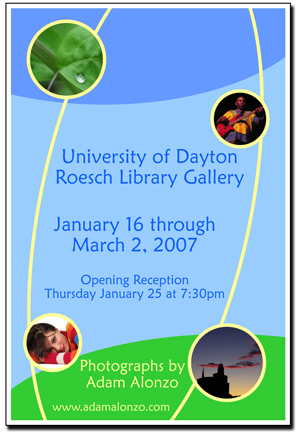
This exhibition is comprised some of my favorite pictures that I’ve taken during the past year. Although the photos are grouped according to several obvious categories, the show itself has no particular theme. Even the title was an afterthought that was added at the last minute as I was creating the poster. I had finished designing the artwork and finally had to decide what to call it.
I considered a clever title that used a pun: “Sees the Day.”

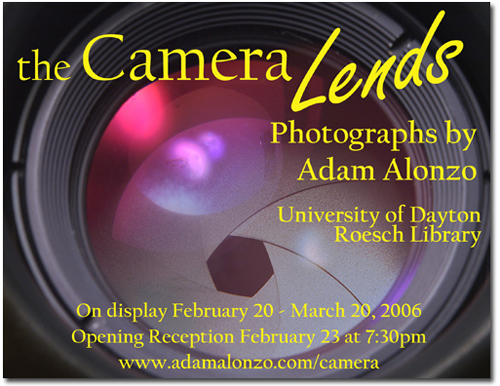
But the show I had here last year also had a clever title that used a pun: “The Camera Lends.”
I didn’t want to be the clever boy all the time, so I settled on a rather dull name: “Eye of the Beholder.”

Since there is no particular focus to this exhibit, it’s only right that there’s no real point to the presentation I’m about to give. I’ll just kind of ramble through some slides and then we can all go home.
Nearly all of these pictures have appeared on the daily photos section of my Web site. In case you weren’t aware, I started a Web page in May 2004 where I post five photos from each day. This page is located at www.adamalonzo.com/photos.
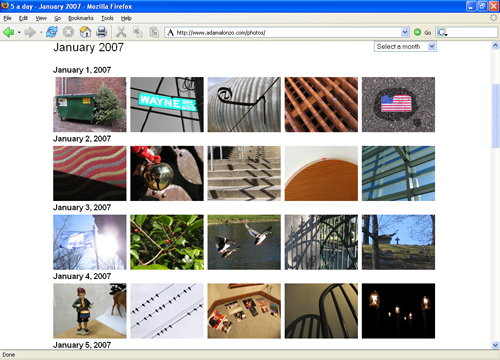
I haven’t missed a day in all that time, although the quality of the images varies widely depending upon what the weather is like, what I’m taking pictures of, and how much time or motivation I have. I guess it’s an accomplishment to be so consistent, but over the past year I’ve struggled to keep a positive attitude toward the whole thing. Some well-meaning people have suggested I should stop forcing myself to take pictures every day, but so far I haven’t taken that advice. The five-a-day quota makes me to venture out into the world looking for interesting images, and sometimes the results are good.
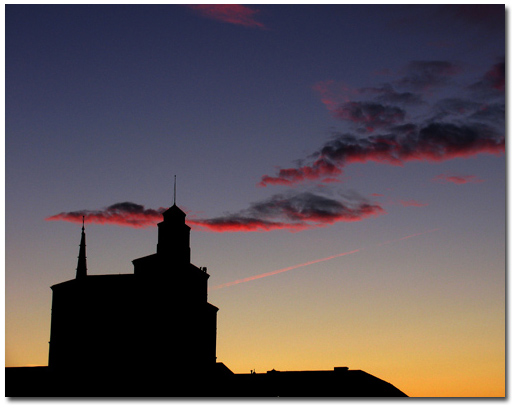
For instance, I would never have been standing on a cold and windy bridge on November 21 if it weren’t for my requirement to take pictures every day. This sunset would have come and gone and I’d have missed it completely.
On the other extreme, there are days like October 30 when this is what I put on my Web site.

I was tired, it was dark, and I really didn’t care. I was so unmotivated that I went to a little shop and actually paid someone else to make my dinner for me. While he was doing so, I took five pictures of the deli counter and that was it. I had certain reasons and goals when I started the five-a-day routine almost three years ago, but those are not really in effect anymore. Now I do it out of obligation, but there are some obligations that are worth doing even though they’re not always enjoyable.
In contrast, there are some positive things that have occurred in the year since my last exhibition here. For one thing, I am now sometimes getting paid to take pictures. I’ve covered several events and festivals for the Downtown Dayton Partnership, and I’m also the photographer for the University of Dayton’s Arts Series. This allows me to sit in the front row and shoot as many pictures as I want during concerts and performances. Some of the pictures in this exhibit were taken while I was playing that role.
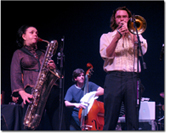
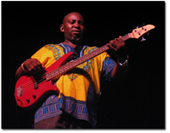
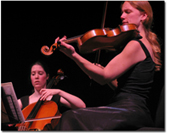
I haven’t quite struck it rich by taking pictures, but there was one really good day last summer when an organization affiliated with UD paid me $100 cash to take one photo.
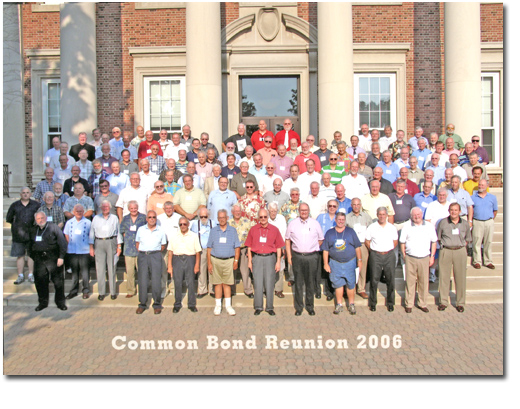
And then there was the time in November when I was paid for not taking a photo.

I was supposed to shoot a family portrait on the day after Thanksgiving. I showed up at the person’s house as scheduled, and the lady nearly jumped off the couch when her son announced I was at the door. She had decided not to go through with it, but neglected to tell me, so she wrote me a check just for ringing the doorbell.
Another new development in the past year is that I have enrolled in a few photography classes, both at UD and Sinclair. I’ve had very knowledgeable teachers and have learned a lot from the classes, and there are a few pictures in this show that came about due to class assignments.

In some cases, I was the only person in the class using a digital camera. All the other students were using film and developing their pictures in a darkroom. I’m a little bit mystified that colleges still make students use film cameras. I think that schools ought to wake up and smell the 21st century: we don’t teach people how to use a typewriter anymore – we teach them how to do word processing. So why spend so much time teaching film, when any photography job a student goes into now will require digital skills? Anyway, the class I’m currently in is Studio Photography and it’s turning out to be the most challenging photo course I’ve taken, especially since it requires math skills.
One of the most significant things that occurred to me photographically in the past year has to do with my camera. In May 2004, I bought a nice Canon camera and started to use it daily, in hot and cold, snow and rain.
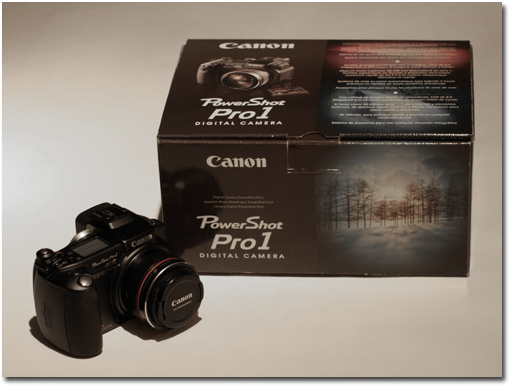
Well, this went on for 927 days, until one chilly Friday in December when the camera just stopped working right. I don’t want to get too technical here, but the camera has something called a shutter and its job is to SHUT. Well my shutter doesn’t shut, so it lets in too much light and the photos are much too bright.
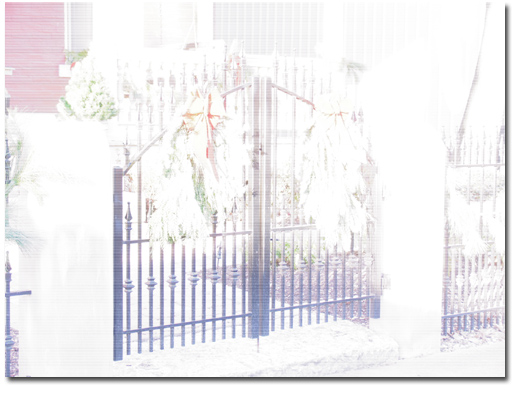
Besides the problem with the shutter, the camera has also exhibits some random weirdness, like this odd picture where the colors are totally wrong.
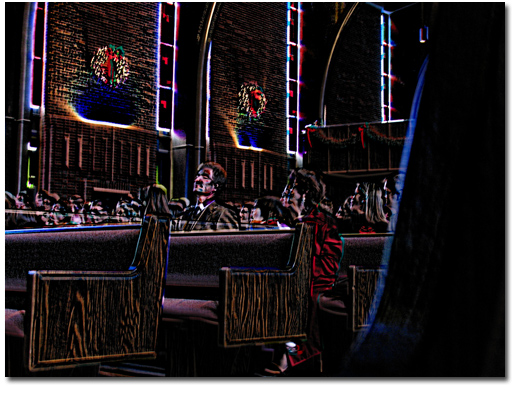
The shutter stops working whenever I set the zoom lens past a certain point. I can take pictures with no problem if the camera is zoomed out, but that’s a very restricting limitation. It's like putting a dog into a two acre yard, but then tying it up with a ten-foot chain. As you can see from most of the pictures on the walls, I like to make very close shots of my subjects – and that’s often done by zooming in rather than getting physically close. Because of this problem, I had to totally rethink the way I take pictures.
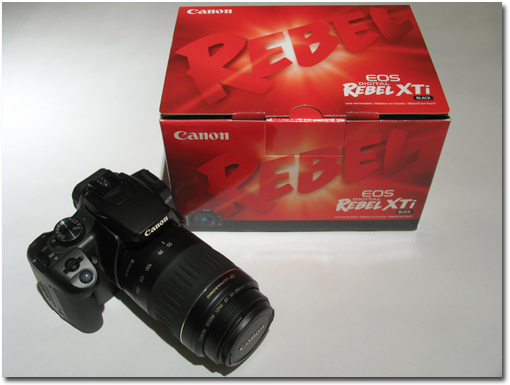
I had already been planning to purchase a new camera, so these problems motivated me to put that plan into action. Two days ago, I bought an even better Canon camera and I’m looking forward to using that one so much it breaks down too.
For the rest of my presentation, I’m just going to go through a few notable images and discuss them, perhaps answering in advance some question you may be thinking of asking. Unfortunately for you, photographers usually don’t let their pictures speak for themselves. We like to talk about them at great length. I was at an art gallery recently and made a casual comment to a photographer about one of his pictures. He went into a grossly detailed account about where he was when he took it, how he was feeling, what he had eaten for breakfast, and so on. I listened patiently because I knew that I do the same thing when people ask about my photos.
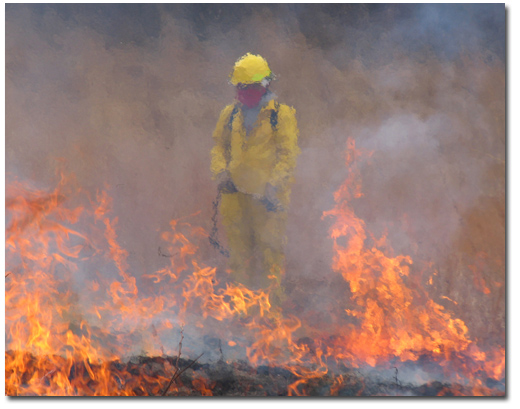
This picture has gotten a lot of questions and comments so far. It was taken at the Marianist Environmental Education Center operated by the University of Dayton. Every year, a portion of the prairie there is deliberately set on fire and I was invited to document the process with my camera. It was the first time that I was actually afraid while taking pictures, because the flames were high and they moved fast. This person was standing across the burning space and the odd distortion that you see was caused by the heat from the flames.
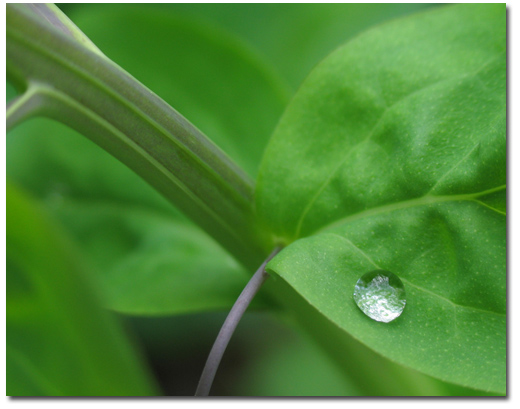
I took this picture on a much calmer day at the same nature preserve. My camera is great at doing extreme close-ups: what looks like a giant stalk is actually the stem of a small bluebell and the dewdrop is very tiny. I got right into the flowers and took dozens of shots. At first the pictures were too bright and the dewdrop was completely white, so I increased the shutter speed to make everything darker. That allowed the drop to take on detail inside, and it gave the leaves a nicely shaded contour.
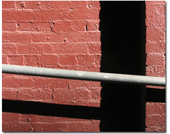
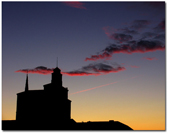
I’d say that 2006 was the year that I stopped being afraid of the dark. When I first started taking pictures, I liked everything to be pretty bright. But I’ve learned that reducing exposure helps to show texture, and it makes the subject of the picture stand out better. Plus shadows and silhouettes can be effectively used as compositional elements to make photos more interesting. Here are a few examples from this show.
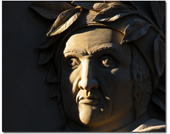
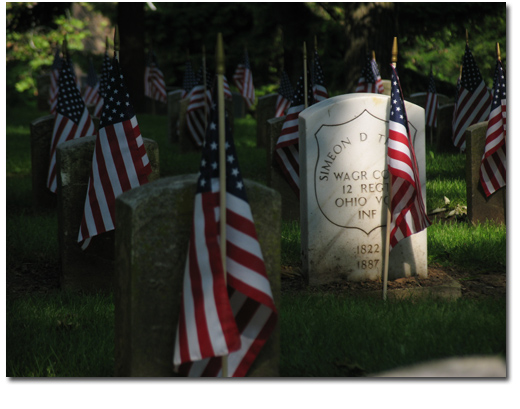
This picture uses light and dark in an interesting way. It’s taken at Woodland Cemetery in an area where there are a lot of very old graves of war veterans. It was on Memorial Day, so the gravestones were decorated with flags. It just so happens that one stone is white while the rest are gray, and the sun was shining on that stone and the rest were in shadow.
This exhibition has an unprecedented number of photos of people. In fact, almost half the show is comprised of either candid shots or posed portraits. When I first started in 2004, I was a little shy about taking pictures of people but I’ve moved up the paparazzi scale quite a bit.
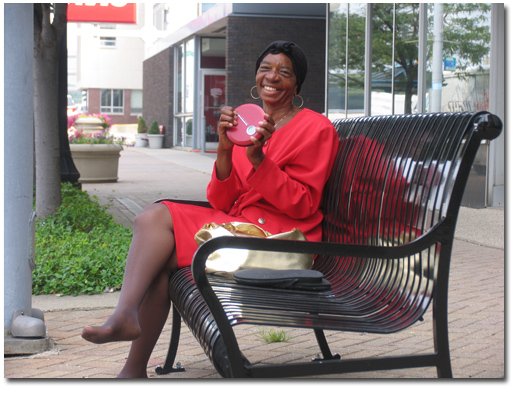
I was walking down Main Street outside the Biltmore Hotel when I saw this lady sitting on a bench. She was holding up a CD player with both hands, waving it back and forth. Although she was nicely dressed, she had no shoes on.
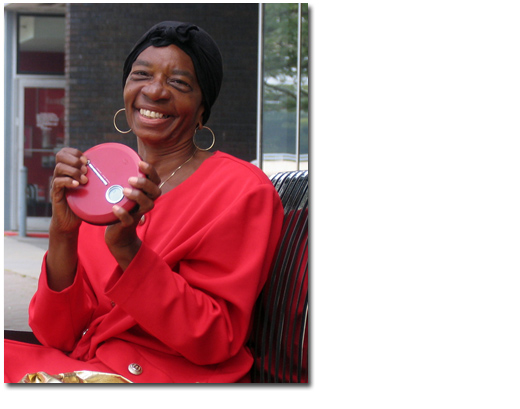
In the uncropped version, I think you can see a pair of sandals on the bench beside her. I spoke to her and she told me she was “taking pictures of the birds.” I asked if I could take her picture and she agreed. Normally I don’t ask permission, but when shooting one person at close range it seems to be the courteous thing to do.
On the other hand, if a person is performing in front of an audience, then I take as many pictures as I want. I ended up with a lot of photos of musicians and dancers in this exhibition.
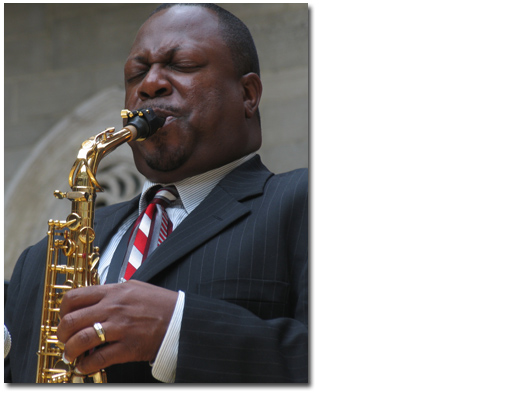
At a jazz concert at the Art Institute I started to take pictures from the front row, but after the first song the band leader/saxophonist signaled for me to come up and speak to him. I gave him a look like “Me? Now?” He nodded, so I walked up and he asked what I was taking pictures for. I told him just my personal use, and he said okay. I felt pretty bad about creating an awkward moment in the middle of a concert. But then DURING the second song he suddenly came down to me and handed me HIS camera. “Take some shots of the band for me,” he said. So for a while I was shooting with two cameras at the same time. His was a pretty nice camera and I did my best, so I hope he was pleased with the photos. My own camera was working fine at that time, so I was able to capture a lot of detail, such as the fine lines on his shirt and suit jacket.
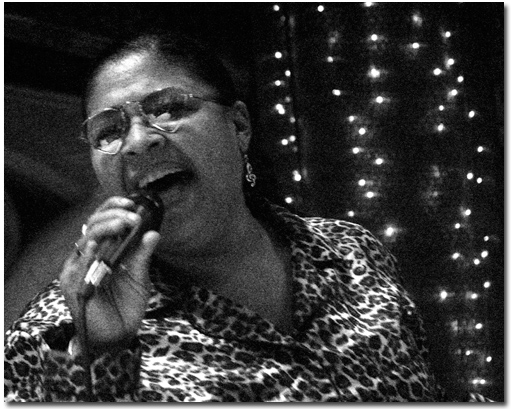
Some time later, I was once again in the front row at the Art Institute for another jazz concert. On this occasion, the lights were very low so I wasn’t able to get pictures with the same clarity as the last one. So I shot some rather grainy black and white images but I think they captured the mood of the performance fairly well. I like this picture because it shows the singer’s energy, and I especially like her heart-shaped glasses and treble-clef earrings. The lights behind her were decorations at the Art Institute and they give a kind of mysterious feel to the image.
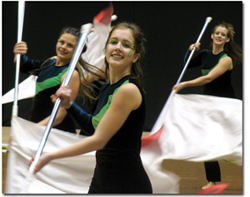
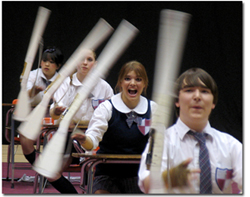
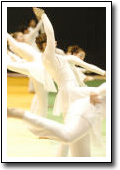
As far as performance photography is concerned, I think the ultimate is color guard. It’s referred to as “the sport of the arts,” and while that may sound pretentious it’s pretty close to the truth. First of all, there’s no doubt that these kids are athletes: color guard requires strength, flexibility, stamina and agility just like any other sport. The teams must be coordinated through a great deal of disciplined practice, and they perform with a high level of competitiveness. But instead of seeing the sweaty uniforms and bouncing balls like you do in other sports, this one features colorful costumes, props like flags, rifles and sabers, and music from Bach, Elgar, Rossini, Copland, Kurt Cobain and Frank Sinatra – all played at a deafeningly loud volume level.
I was lucky enough to sit in the front row at the world color guard championships held at the University of Dayton arena. Three hundred teams came from all over the United States and from other countries. Their long journey might end with a world championship, or with the unmistakable clang of a flag being dropped. If one of these kids makes a mistake, then the whole team might as well go home. This group was one of my favorites: notice that none of them are actually touching their rifles at the moment I shot the picture. I took two days off work so I could attend the color guard world championships. By the time it was over my back ached, I could barely hear, and my shutter finger was nearly broken, but the pictures I got made it worth the time and effort.
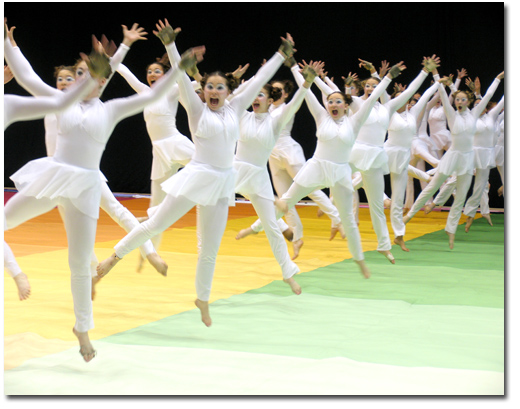
This team divided up into two lines along the left and right sides of the stage. They faced each other and acted like they were ready to attack. I had no idea what they were going to do, so I zoomed out and focused on a spot in the middle of the floor. Then they ran toward each other and I pressed the button; the viewfinder goes dark at the instant a camera takes a picture, so I actually did not see this moment occur. But my camera did, and it held the image in the viewfinder for a second and I felt very happy when I saw it. I was at this competition just for my own enjoyment, but there were some official photographers sitting right next to me. I later looked on their Web site to see what they captured at that moment and compared it to mine.
Once again, I’d like to thank you for coming. I’d also want to express appreciation to my coworkers at the library who helped prepare for this evening’s reception. Please help yourselves to refreshments and let me know if you have any questions or comments about the photos.